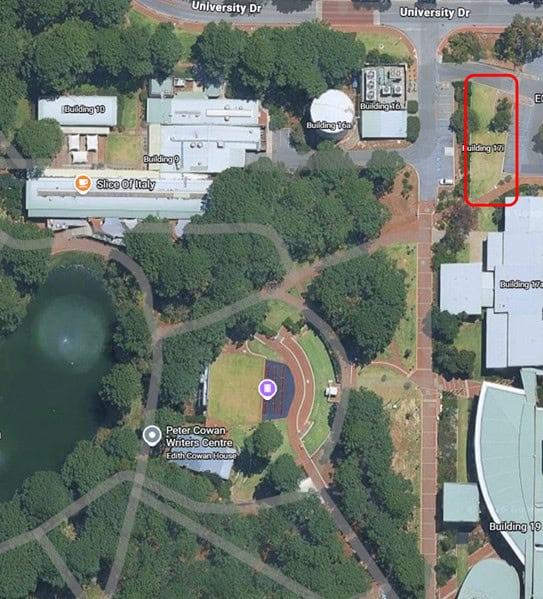
There’s a brand new bushfood garden at Edith Cowan University (ECU), brimming with life and ready for the growing season. Situated beside Building 17 on the Joondalup campus, it offers an immersive natural space where students and visitors can learn about each bushfood plant and the role it plays in local Indigenous culture.
This garden is the brainchild of the uni’s Nutrition and Dietetics department, participating in the Indigenising Curriculum movement, a nationwide collaboration aiming to integrate Indigenous perspectives in university education. So, as you can imagine, we were stoked when they reached out to us about setting up this space.
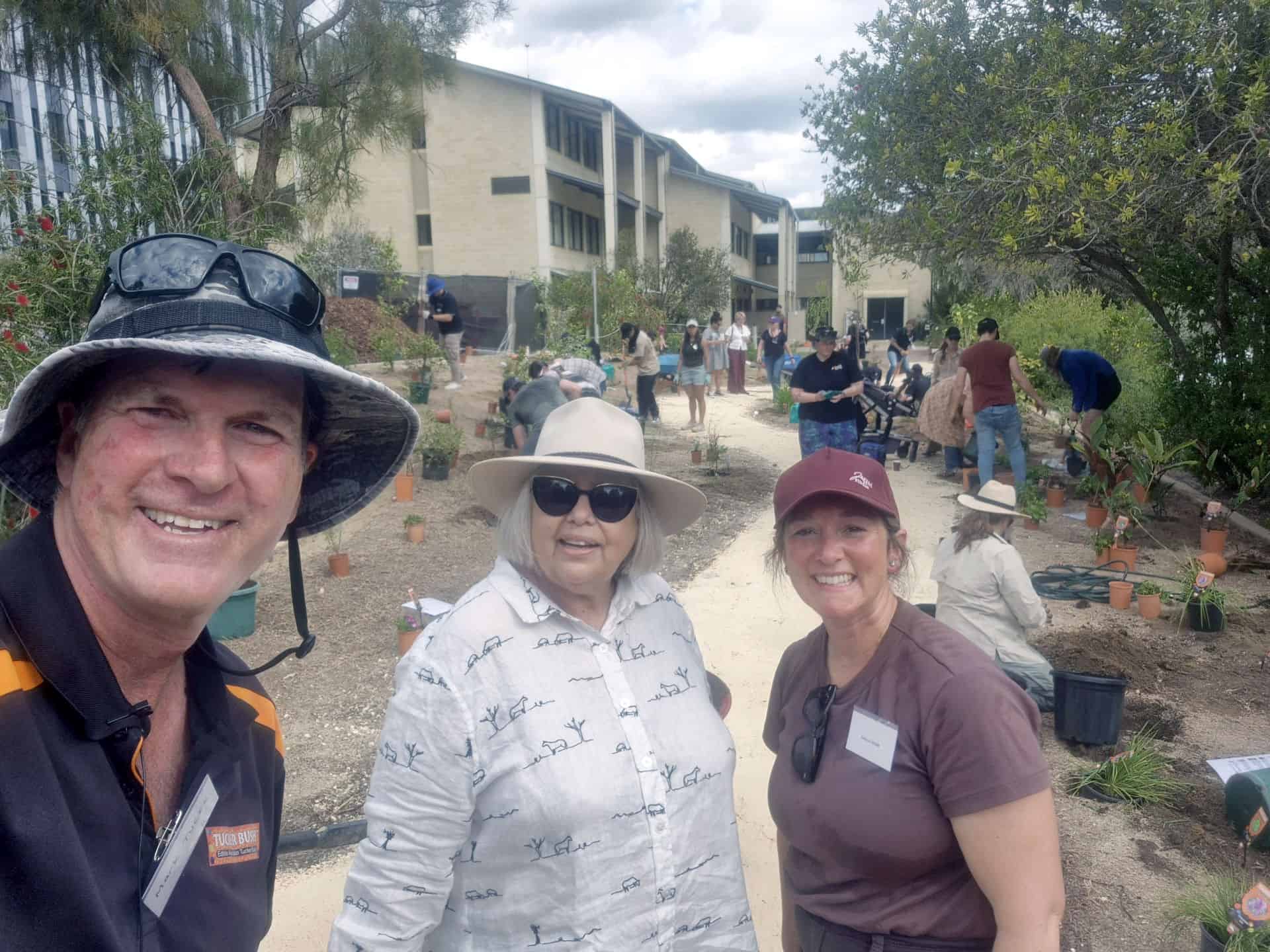
Even though we’ve planted many on-campus bushfood spaces through the Tucker Bush Schools Program, this was our first university garden designed to fit into an educational program already in development. Our directors, Mark Tucek and Aunty Dale Tilbrook, were only too glad to lend their expertise to this fantastic project.
Bushfood garden in the home of the world’s largest periodic table
Planning for the garden began in August 2025, in collaboration with representatives from the Nutrition and Dietetics Research Team in the Medical and Health Sciences School. Together we assessed the bushfood potential of the entire space, taking into account fixed structures, non-native weeds, foot traffic flow, long-term maintenance needs, site preparation, and the garden’s place in the School’s overall educational program.
Find out more about the TuckerBush Schools Program.
Over the next few months, ECU set out to remove the under-utilised lawn and prepare the ground for planting. Lawn removal is a theme we’re seeing more regularly in schools and community hubs across the state. Lawns, by and large, are a garden feature imported from a different time and climate, wholly unsuited to Western Australia’s mix of patchy heavy rain, long dry spells, and sandy soil.
We recommended a three-step process:
- Routine overwatering of the lawn to soften the roots
- Intentional “incorrect” application of fertiliser to make the salt balance unsuitable for grass
- Finally, lowering the soil to 5cm below the paving level to make room for mulch
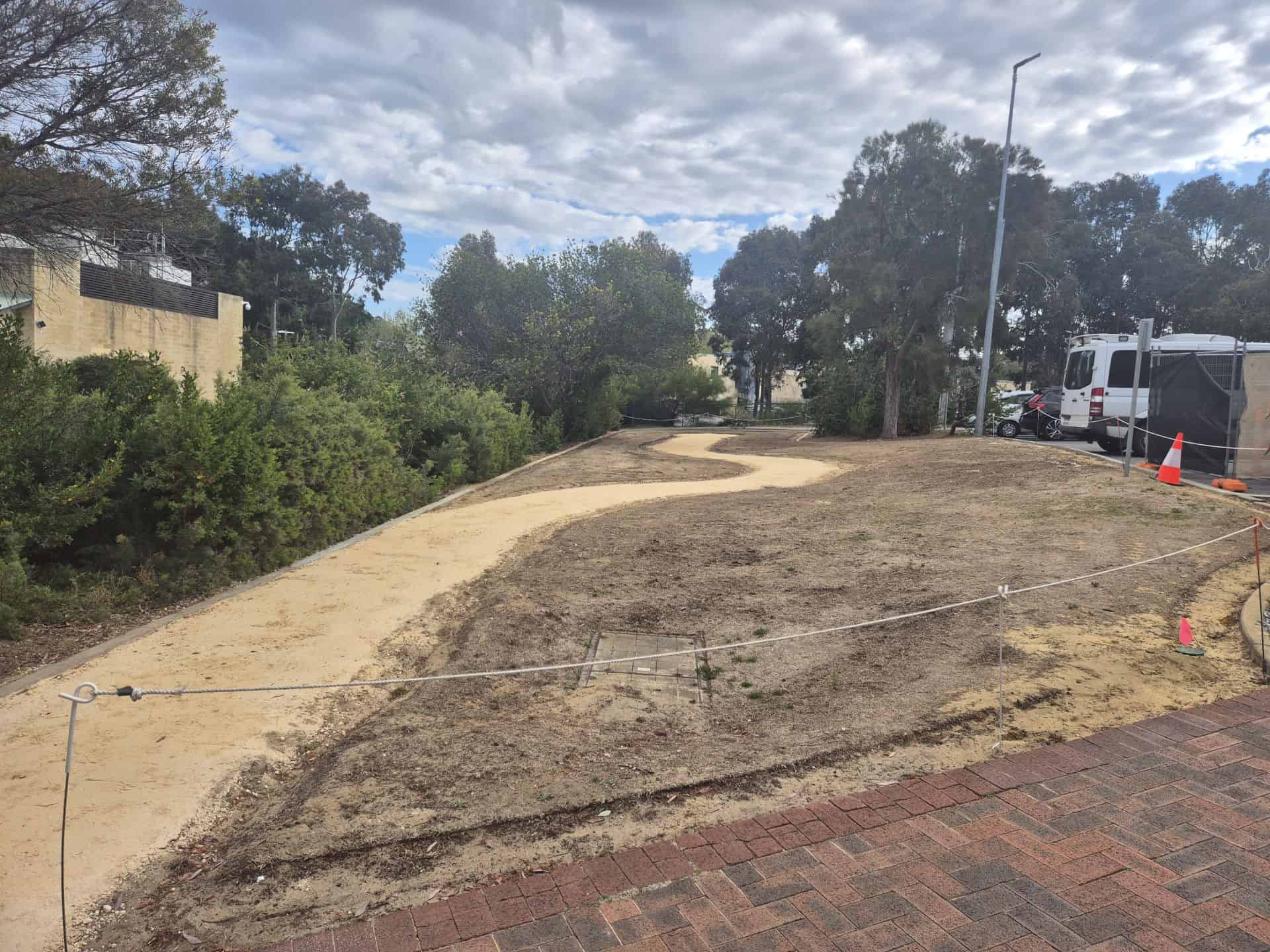
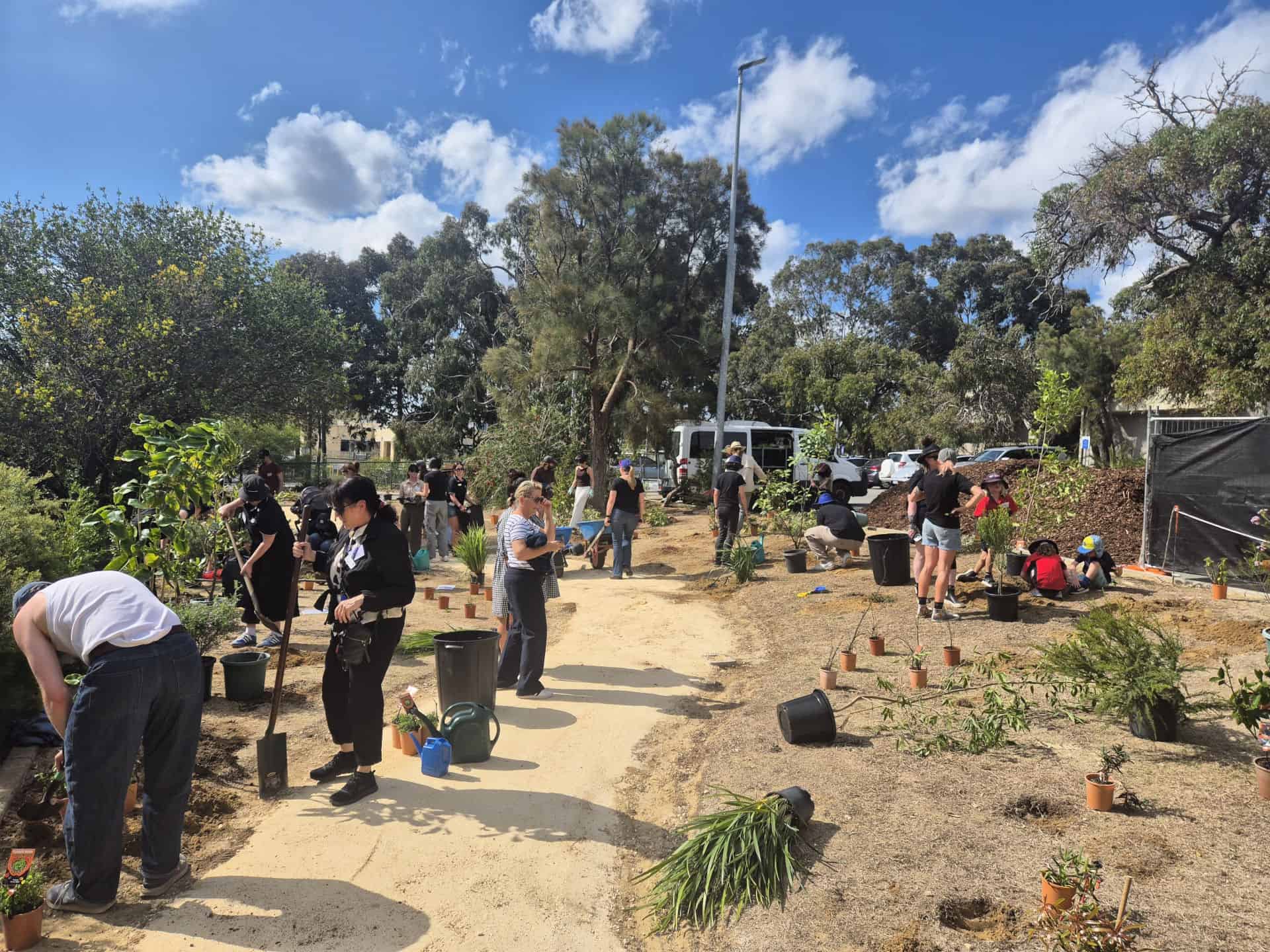
Before and after: Lawn removal and ground re-levelling to prepare the planting site for a long-term garden full of bushfood plants
Thankfully, improving the soil for planting didn’t have to happen across the entire space. For a site this big, it’s more practical to work around the individual planting holes with a 50/50 compost mix, giving just the new plants the nutrients and structure they need while establishing.
Garden design and the micro-forest mindset
Every plant in this bushfood garden is edible in some form. Alongside the goals of giving students a hands-on learning environment, we also wanted to inspire people to grow and enjoy Australian bushfoods themselves. This is at the heart of our vision: a homegrown culinary culture where we can all enjoy the best of native and exotic flavours for generations to come.
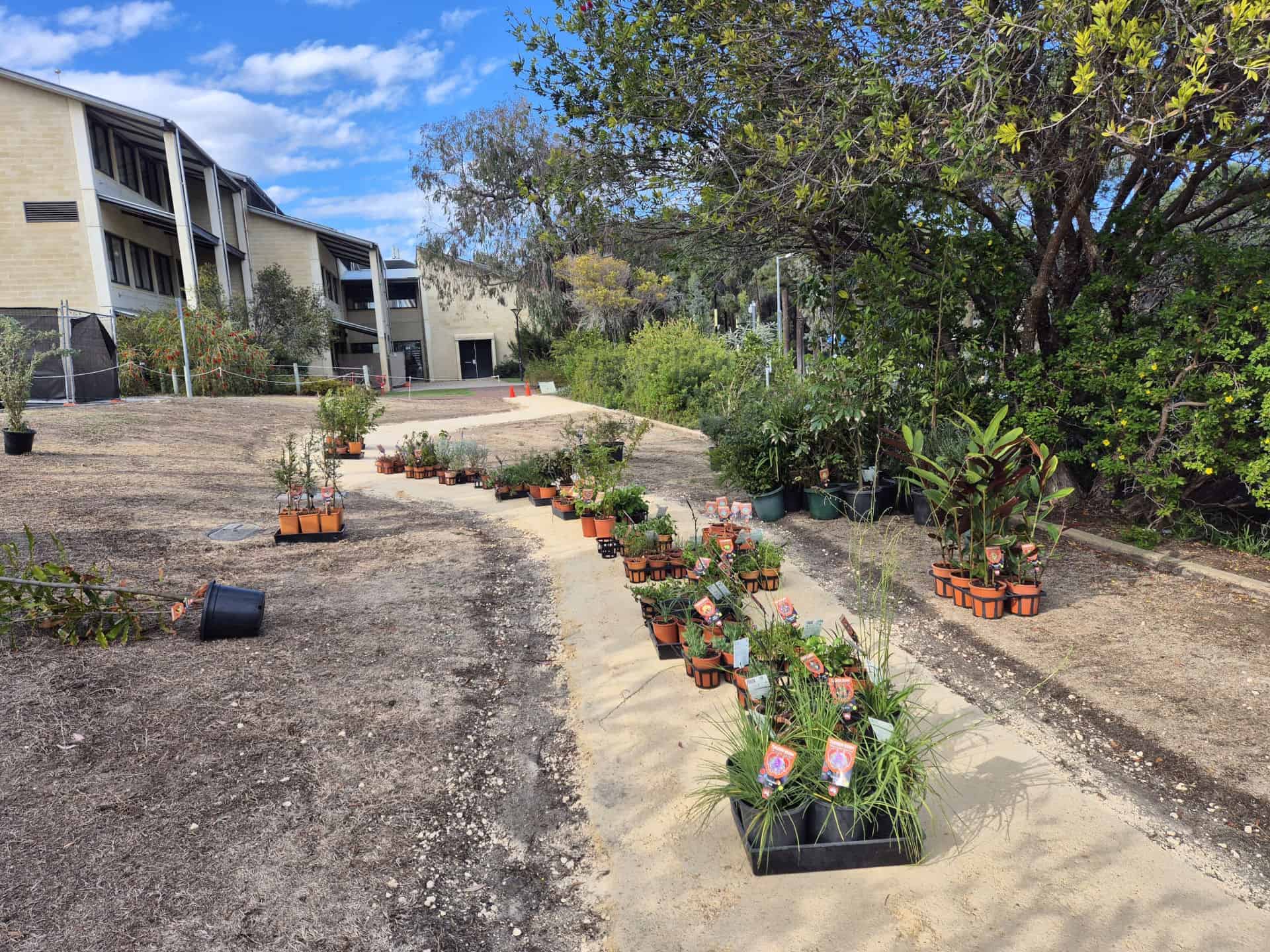
On Mark’s advice, the garden features a wide range of edible Noongar, West Australian, and Australian Native edible plants, including local favourites you may already know and love:
- Old Man Saltbush (Purngep, Atriplex nummularia)
- Sea Parsley (Apium prostratum var. prostratum)
- Ruby Saltbush (Enchylaena tomentosa)
- Youlk (Platysace deflexa)
- Warrine (Dioscorea hastifolia)
- Blueberry Lily (Mangard, Dianella revoluta)
- Red Eyed Wattle (Wilyawa, Acacia cyclops)
The final plant selection consisted of nearly 70 varieties based on seasonal availability and creating a garden that showcases the diversity of Australia’s edible flora. We emphasised species suited to Perth’s “Mediterranean” climate, and those traditionally used in the Southwest (Noongar) region, applying our much beloved micro-forest “layering” concept.
See our related blog post The Micro-forest Mindset.
Taking inspiration from a Noongar pocket garden already on campus (Building 21 in the School of Medical and Health Sciences), this larger garden also incorporates signage explaining the six Noongar seasons and how different bushfoods blossom, fruit, and are traditionally harvested at different times of year.
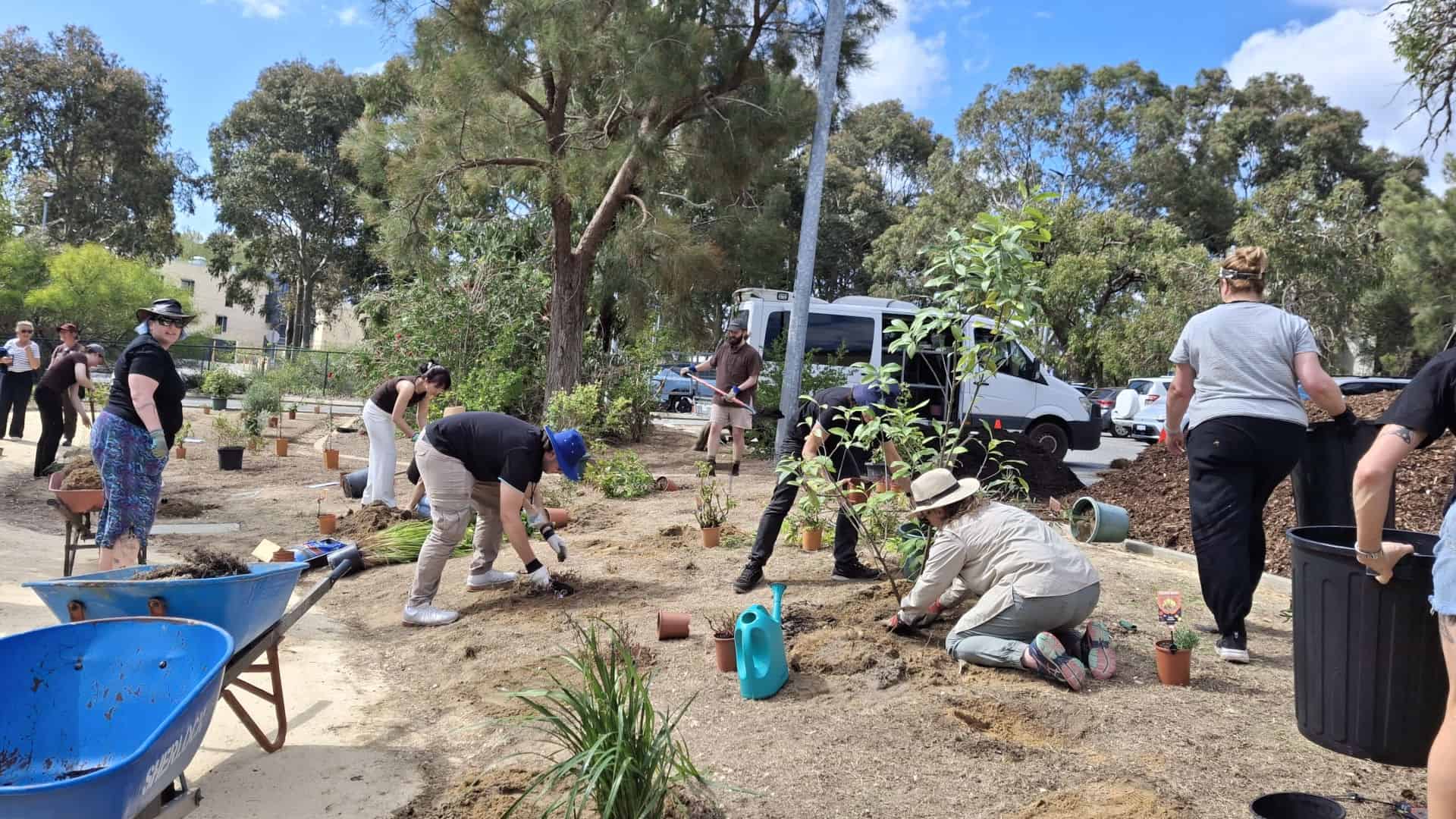
Teamwork makes the dream work
With local species springing back to life between the sunshine and rain, Djilba is the best season in Southwest WA for native plantings. The ECU planting team consisted of over thirty students and staff from across the School of Medical and Health Sciences, supervised on the day by Aunty Dale, Mark, and project organisers Kathryn Di Candilo, Mairi Buchanan, and Associate Professor Therese O’Sullivan.
As Tucker Bush’s Cultural Director and a proud Wardandi Bibbulmun Noongar Elder, Aunty Dale’s involvement ensures the garden reflects and respects the cultural significance of Australia’s native food species.
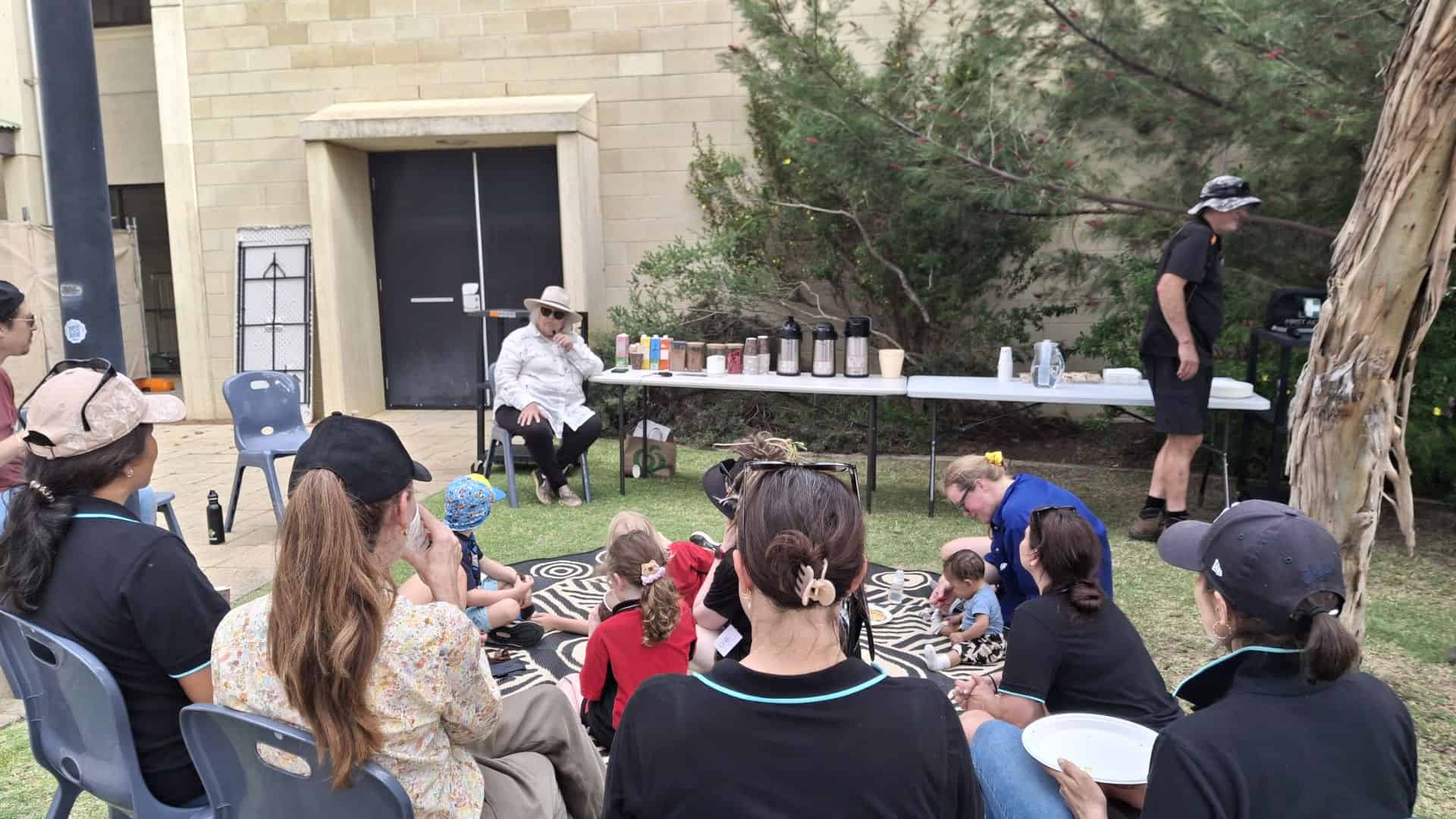
After planting nearly 200 individual plants, the team gathered around for snacks, refreshments, and a taste of Aunty Dale’s stories about food, traditional knowledge, and Noongar culture.
Bushfood, community and culture with Tucker Bush
Aunty Dale and Mark would like to thank everyone involved in ECU Joondalup’s new Tucker Bush garden, especially:
Paediatric Dietician Kathryn Di Candilo, Associate Professor Therese O’Sullivan, and Senior School Manager Mairi Buchanan from the School of Medical and Health Sciences at Edith Cowan University, for collaborating with us on this exciting project.
Ruby-Jean Hindley, Senior Learning Designer at Edith Cowan University, for facilitating ECU’s Indigenising Curriculuminitiative.
Carl Overbye, Grounds Services Manager at Edith Cowan University, who with his team looked after the hard work of preparing the site and planning for long-term care of the new garden.
The students and staff from ECU’s School of Medical and Health Sciences, who brought ample enthusiasm and elbow grease for a fun and successful planting day.