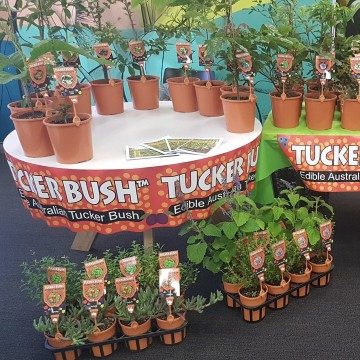
Think you know where your food comes from? Think again.
Through our work in the Tucker Bush Schools Program, we’ve seen just how disconnected many students — and educators — have become from the food systems that sustain us.
We still encounter NAIDOC Week damper recipes based on misconceptions about ingredient availability and nutrition. Many school-aged students believe cows on commercial dairy farms are hand-milked. These misunderstandings aren’t about capability — they’re about distance. Distance from land, labour, culture, and story.
Since the Second World War, industrialisation has created food abundance for many urban communities in wealthy countries. But that abundance has come with a trade-off. As food became easier to access, many of us lost our relationship with where it comes from, how it’s grown or harvested, and the cultural systems that once held food knowledge together.
That disconnection matters. Because food isn’t just fuel — it’s relationship, responsibility, and belonging.

Native food isn’t a trend — it’s a return
What’s often described as “native food fever” isn’t a fad. It’s a remembering. A reconnection. A return to knowledge systems that have sustained people on this continent for tens of thousands of years.
Learning about native foods means learning about culture, community, and caring for Country. It invites respect for seasons, elements, and the responsibilities that come with harvesting and sharing food. It helps normalise a way of living that prioritises nourishment, sustainability, and intergenerational wellbeing.
What we learn when we love native foods
Refined white wheat flour contains very little nutritional value. In a balanced modern diet, it may not cause immediate harm. But as a staple food it quickly leads to malnutrition.
This simple fact opens important questions:
- What foods sustained Australian peoples before colonisation?
- What ingredients supported health across diverse landscapes?
- How were food systems organised to ensure availability across seasons?
Asking these questions creates space for curiosity and learning that ultra-processed foods rarely invite.
When we learn about Murnong (Yam Daisy), we also learn about women’s knowledge, digging sticks, soil care, and how the introduction of sheep devastated staple food systems, sparking conflict with the Wurundjeri people in what is now Melbourne.
On Ngarrindjeri Country, Muntries – spicy, apple-flavoured berries – were eaten, preserved, and traded. From there we can ask how foods travelled, how knowledge moved, and how environmental change in one region affected others.
Native foods reflect the diversity of our landscapes and the people who belong to them. They come carrying story, law, science, and responsibility.

What native food education brings to schools
Schools don’t need a garden to start teaching native foods – but something powerful happens when they have one.
Native food gardens create spaces where students learn through observation, touch, and participation. They allow children to witness food growing, notice seasons, and see adults modelling respectful relationships with the natural world. For many students, this is their first meaningful connection with Country.
When gardens aren’t possible, schools can still engage deeply by:
- incorporating native ingredients into cooking classes
- learning the cultural histories – including the impacts of colonisation – behind foods
- inviting Aboriginal educators and Knowledge Holders to share stories
- participating in excursions to farms, nurseries, and guided on-Country experiences
Some lessons are better learned through immersion than instruction.
Oh, and about that damper…
Aunty Dale Tilbrook recommends using Wattleseed instead of white flour when making damper. Wattleseed is a low-GI, nutrient-dense, plant-based protein that reflects traditional approaches to nourishment and balance.
Register for the Tucker Bush Schools Program to receive Aunty Dale’s damper recipe for your next classroom cook-up. Participating schools will also be eligible to enter our 2026 competition to win a Tucker Bush garden, helping embed this learning for generations to come.